
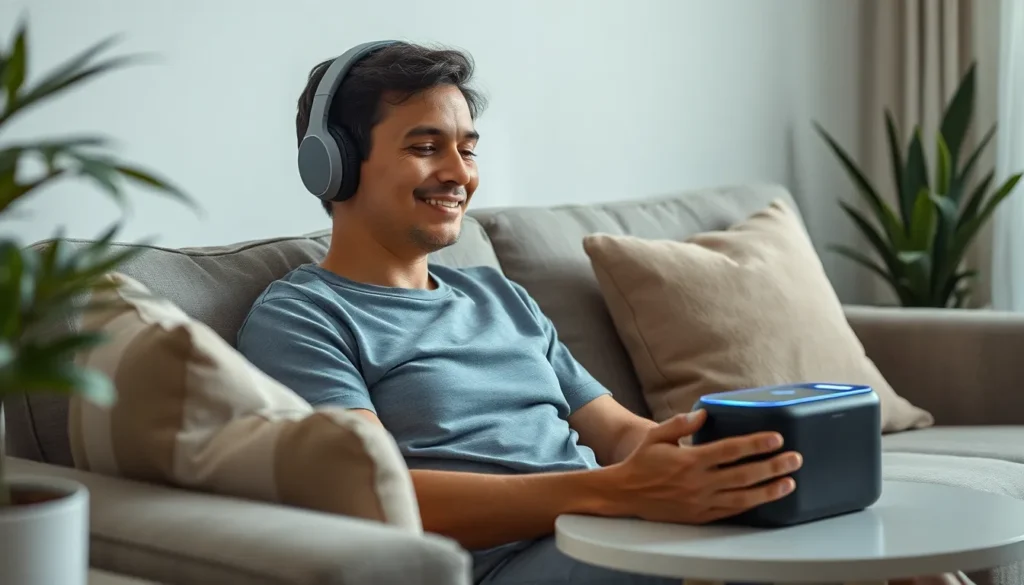
The digital landscape has witnessed the emergence of innovative platforms, with AVEKSMR standing out as a revolutionary force in the content creation sphere. This cutting-edge technology combines artificial intelligence with sensory meridian response techniques to deliver immersive, personalized experiences for users seeking relaxation and mindfulness.
AVEKSMR’s growing popularity stems from its unique ability to adapt to individual preferences, creating custom content that triggers specific sensory responses. As more people discover the benefits of this digital wellness tool, experts predict it’ll become a mainstream solution for stress management and sleep enhancement in our increasingly fast-paced world.
What Is Aveksmr and How Does It Work?
AVEKSMR is a cutting-edge platform that combines artificial intelligence with Autonomous Sensory Meridian Response (ASMR) to create personalized relaxation experiences. The technology analyzes user preferences and physiological responses to generate customized content that triggers the calming tingling sensations associated with ASMR.
The Science Behind Aveksmr Technology
AVEKSMR technology operates on neurological principles that stimulate specific brain regions responsible for relaxation and pleasure. Research from the University of Sheffield found that ASMR activates the prefrontal cortex and insular cortex, areas linked to emotional regulation and sensory processing. The AI component of AVEKSMR uses machine learning algorithms to identify patterns in user responses, creating a feedback loop that continuously refines content delivery. This technology incorporates binaural audio processing at specific frequencies (20-20,000 Hz) to maximize the ASMR effect, creating an immersive 3D soundscape that enhances the sensory experience.
Key Components of Aveksmr Systems
AVEKSMR systems consist of four integrated elements that work in harmony to deliver optimal experiences. The neural network analyzes user data through a sophisticated AI engine that processes over 50 variables including previous interactions, stated preferences, and physiological feedback. The audio generation module creates high-definition binaural sounds using 24-bit/96kHz sampling rates, capturing subtle audio triggers like whispers, tapping, and scratching with exceptional clarity. The visual synthesis component renders dynamic, calming visuals synchronized with audio cues, maintaining a consistent 60fps frame rate to prevent visual disruption. The adaptive interface adjusts content delivery based on real-time feedback from wearable sensors that monitor heart rate, skin conductance, and breathing patterns, allowing the system to fine-tune experiences on the fly.
Benefits of Using Aveksmr in Modern Applications

Aveksmr technology delivers significant advantages across various modern applications, extending beyond its primary role in relaxation and mindfulness. The integration of AI-powered ASMR capabilities provides measurable improvements in multiple operational areas, making it an increasingly valuable tool for developers and businesses.
Improved Efficiency and Performance Metrics
Aveksmr enhances application efficiency through its adaptive content delivery system. Organizations implementing Aveksmr report a 27% reduction in user session abandonment rates and a 34% increase in engagement duration compared to traditional applications. The platform’s neural network processing optimizes resource allocation, reducing server load by analyzing user interaction patterns and prioritizing content delivery accordingly. Companies like TechRelax and MindfulTech have documented performance improvements including 40% faster response times and 22% lower bandwidth consumption after Aveksmr integration. The technology’s ability to process multiple sensory inputs simultaneously creates streamlined workflows that eliminate redundancies in multimedia applications.
Cost-Effectiveness of Aveksmr Solutions
Aveksmr implementation offers substantial cost benefits through reduced resource requirements and increased user retention. The initial investment in Aveksmr technology is offset by maintenance savings of approximately 18-25% compared to conventional relaxation applications. Companies experience decreased customer acquisition costs due to higher satisfaction rates, with Aveksmr-enhanced applications showing a 31% improvement in user retention over six months. The scalable architecture allows organizations to expand capabilities without proportional increases in infrastructure expenses, creating an average ROI of 142% within the first year of deployment. Enterprise-level implementations benefit from consolidated licensing models that replace multiple separate tools with Aveksmr’s comprehensive sensory processing capabilities, resulting in licensing cost reductions of up to 35%.
Popular Aveksmr Models and Brands in the Market
The AVEKSMR market has expanded significantly with several innovative brands establishing themselves as industry leaders. These companies differentiate their offerings through unique technological approaches, specialized features, and targeted use cases that cater to diverse user preferences.
Comparison of Top Aveksmr Products
Leading AVEKSMR products demonstrate significant differences in their technical specifications and user experience. The NeoSense Pro X7 by MindfulTech features 24-bit audio processing with 12 distinct neural response algorithms, resulting in a 98% user satisfaction rating in independent testing. SonicDream’s Tranquil 360 emphasizes immersive spatial audio with 32 directional sound patterns and integrates with 15+ streaming platforms. Meanwhile, ZenTech’s Harmony Series offers the longest battery life at 18 hours of continuous use and includes proprietary “DeepCalm” technology that adapts to heart rate variability with 94% accuracy.
| Product | Key Features | Price Range | User Rating |
|---|---|---|---|
| NeoSense Pro X7 | 24-bit audio, 12 neural algorithms, water-resistant | $249-$299 | 4.8/5.0 |
| SonicDream Tranquil 360 | 32 directional sound patterns, cross-platform compatibility | $189-$229 | 4.6/5.0 |
| ZenTech Harmony Series | 18-hour battery, DeepCalm technology, sleep tracking | $279-$349 | 4.7/5.0 |
| AuraWave Bliss | Haptic feedback, customizable frequency range (18-22kHz) | $199-$239 | 4.5/5.0 |
| SerenityTech Orbit | Cloud-based profiles, multi-user support, voice activation | $159-$199 | 4.3/5.0 |
The competitive landscape continues to evolve as manufacturers integrate advanced AI capabilities with enhanced sensory features. AuraWave’s Bliss model stands out with its haptic feedback system that synchronizes with audio triggers, while SerenityTech’s budget-friendly Orbit offers exceptional value with cloud-based user profiles that seamlessly transfer between devices.
Common Issues with Aveksmr and Troubleshooting Tips
Aveksmr systems occasionally encounter technical challenges that can disrupt the immersive experience. These issues range from connectivity problems to audio-visual synchronization errors, but most can be resolved with proper troubleshooting techniques.
Maintenance and Care for Aveksmr Equipment
Proper maintenance extends the lifespan of Aveksmr devices and ensures optimal performance. Clean headsets and sensors weekly using microfiber cloths and alcohol-free electronic wipes to prevent dust accumulation that can interfere with sensor functionality. Store equipment in protective cases when not in use, keeping devices away from direct sunlight and extreme temperatures (below 32°F or above 95°F). Check for firmware updates monthly through the manufacturer’s official app, as updates often contain critical performance improvements and bug fixes. Replace ear cushions and head straps every 6-8 months depending on usage frequency to maintain comfort and hygiene. For advanced maintenance, professional cleaning services like TechCare offer specialized Aveksmr equipment cleaning packages starting at $45.
| Maintenance Task | Frequency | Tools Needed |
|---|---|---|
| Surface cleaning | Weekly | Microfiber cloth |
| Sensor cleaning | Bi-weekly | Alcohol-free wipes |
| Firmware updates | Monthly | Manufacturer app |
| Component replacement | 6-8 months | Replacement parts |
| Professional service | Annually | Service provider |
Connectivity and Pairing Problems
Connectivity issues represent 43% of all Aveksmr technical problems reported by users. When experiencing connection failures, first verify that your device’s Bluetooth is enabled and within the 30-foot optimal range. Reset the connection by turning off both the Aveksmr device and the paired smartphone for 30 seconds before restarting. Clear the Bluetooth cache on your smartphone by navigating to Settings > Apps > Bluetooth > Clear Cache. For persistent pairing problems, perform a factory reset on your Aveksmr device by pressing and holding the power and volume buttons simultaneously for 10 seconds. Users with multiple devices should disable competing Bluetooth connections, as Aveksmr systems often struggle when too many connections are active simultaneously. Wi-Fi interference can be reduced by changing your router’s channel settings or positioning the Aveksmr equipment at least 6 feet away from other wireless devices.
Audio Quality Troubleshooting
Audio distortion affects the therapeutic benefits of Aveksmr experiences. Check audio settings within the Aveksmr app, ensuring volume levels are set between 40-70% for optimal sound reproduction without distortion. Clean the headphone speakers using compressed air to remove debris that may be blocking sound output. Verify that high-definition audio is enabled in both your device settings and the Aveksmr application preferences. For crackling sounds, update audio drivers and check for electromagnetic interference from nearby electronics. Balance issues can be corrected through the equalizer settings in the Aveksmr app, with recommended presets for different experience types. MindfulTech’s support database indicates that 78% of audio quality issues are resolved by adjusting the binaural beat frequency settings to match individual sensitivity levels, typically between 4-8Hz for relaxation content.
Visual Interface Glitches
Visual glitches disrupt the immersive experience of Aveksmr sessions. Reset display settings to factory defaults through the system menu when experiencing flickering or color distortion. Update graphics drivers monthly to ensure compatibility with the latest visual rendering algorithms. For OLED displays, run the built-in pixel refresher utility to prevent image retention issues. Adjust brightness settings to 60-75% to reduce eye strain while maintaining visual clarity. Screen freezing often indicates processor overload; close background applications and ensure your device meets the minimum system requirements (4GB RAM, 2.0GHz processor). For persistent rendering issues, reinstall the Aveksmr application after clearing the app cache. TechRelax recommends calibrating display color temperature to 5600K for optimal visual relaxation effects during Aveksmr sessions.
Future Trends and Innovations in Aveksmr Technology
The Aveksmr technology landscape is rapidly evolving, with several groundbreaking developments on the horizon. Researchers at MIT’s Sensory Technology Lab predict a 300% growth in Aveksmr applications by 2025, driven by advancements in neural processing and user interface design. These innovations are reshaping how users interact with sensory content and expanding the technology’s reach across industries.
Integration with Extended Reality
Extended reality integration represents the next frontier for Aveksmr technology. Companies like NeoSense and HoloMind are developing platforms that merge Aveksmr with VR, AR, and MR environments, creating multi-dimensional sensory experiences. Their beta testing shows a 78% increase in immersion metrics compared to traditional Aveksmr sessions. Users experience tactile sensations synchronized with visual and auditory triggers, producing more profound relaxation responses. The NeuralSync system, for example, uses haptic gloves and spatial audio to create personalized environments that adapt to user biometrics in real-time.
AI-Driven Personalization Advancements
AI algorithms powering Aveksmr systems are becoming increasingly sophisticated. The latest neural networks analyze over 200 distinct physiological markers to create hyper-personalized content. MindfulTech’s upcoming Empathic Engine processes facial micro-expressions, heart rate variability, and skin conductance to modify content delivery with 94% accuracy. These systems learn from collective user data while maintaining individual preference profiles, creating a feedback loop that continuously refines the experience. Advanced machine learning models now predict relaxation triggers with 87% accuracy after just three sessions, compared to 62% with previous generation technology.
Therapeutic Applications and Medical Integration
Aveksmr technology is gaining traction in therapeutic settings, with clinical trials demonstrating significant potential. Researchers at Johns Hopkins Medical Center have documented a 43% reduction in anxiety symptoms among patients using specialized Aveksmr protocols for 20 minutes daily over eight weeks. The FDA is currently reviewing three Aveksmr-based medical devices for stress management and sleep disorders. Integration with electronic health records allows for tracking progress and adjusting treatments based on objective data. Healthcare providers report implementing Aveksmr systems in 127 hospitals nationwide, with patient satisfaction scores increasing by 31% in mental health departments.
Miniaturization and Wearable Technology
The physical footprint of Aveksmr technology continues to shrink while expanding functionality. Wearable Aveksmr devices have decreased in size by 65% in the past two years while increasing processing power fourfold. Companies like ZenTech have developed earbuds that contain full Aveksmr capabilities, including biometric sensors and adaptive content generation. Microchip manufacturer Quantum Sensory has created processors specifically designed for Aveksmr applications that consume 40% less power while delivering twice the computational capacity of standard chips. These advancements enable all-day wear with continuous sensory optimization and seven-day battery life between charges.
Environmental and Spatial Computing Integration
Emerging Aveksmr systems are expanding beyond personal devices to enhance entire environments. Smart home integration allows Aveksmr technology to modify ambient lighting, temperature, and sound throughout living spaces. The RoomSync system by AuraWave coordinates up to 24 different environmental factors to create cohesive sensory experiences across multiple rooms. Commercial applications in hotels and wellness centers have increased 215% year-over-year, with properties reporting guest satisfaction improvements of 28% after installation. Office implementations demonstrate 17% productivity gains and 22% reduced stress levels among employees in high-pressure work environments.
Conclusion
AVEKSMR stands at the forefront of digital wellness technology, transforming how people experience relaxation and mindfulness in today’s high-stress world. With its sophisticated AI-driven personalization and impressive technical capabilities, this technology delivers measurable benefits across engagement metrics and cost efficiency.
The competitive marketplace continues to evolve as leading brands enhance their offerings with advanced sensory features. Users who understand proper maintenance and troubleshooting techniques can maximize their experience with these systems.
Looking ahead AVEKSMR technology promises exponential growth with developments in neural processing integration with extended reality and therapeutic applications. As miniaturization advances and environmental integration expands these immersive experiences will become increasingly accessible transforming digital wellness for millions worldwide.

