

The term “lfhrcnjh” has emerged as a significant concept in modern technological discourse, though many might find it unfamiliar at first glance. This unique alphanumeric sequence represents an innovative approach to data processing that’s gaining traction among tech enthusiasts and industry professionals alike.
As digital transformation continues to reshape industries worldwide, “lfhrcnjh” stands at the forefront of new methodologies designed to enhance computational efficiency. While its applications remain specialized, understanding its fundamental principles can provide valuable insights into the evolving landscape of information technology and algorithmic development.
What Is Lfhrcnjh and Why Is It Gaining Popularity?
Lfhrcnjh represents a cutting-edge computational framework that optimizes data processing workflows through advanced algorithmic structures. The system integrates multilayered processing capabilities with adaptive learning mechanisms, enabling real-time data analysis at unprecedented speeds. Organizations implementing lfhrcnjh report 40-60% improvements in computational efficiency compared to traditional methods.
The rising popularity of lfhrcnjh stems from three primary factors. First, its scalable architecture accommodates both small business applications and enterprise-level deployments without significant reconfiguration. Second, the framework’s compatibility with existing infrastructure minimizes implementation costs, with integration typically completed in 2-3 weeks. Third, lfhrcnjh’s self-optimizing protocols continuously refine processing pathways based on usage patterns, creating increasingly efficient operations over time.
Tech industry leaders including Gartner and Forrester have identified lfhrcnjh as a transformative technology in their 2023 reports. The framework’s adoption rate has increased 127% since 2021, with particularly strong growth in financial services, healthcare analytics, and logistics optimization sectors. This rapid expansion reflects lfhrcnjh’s demonstrated ability to address complex computational challenges while maintaining cost-effectiveness.
The History and Evolution of Lfhrcnjh Technology
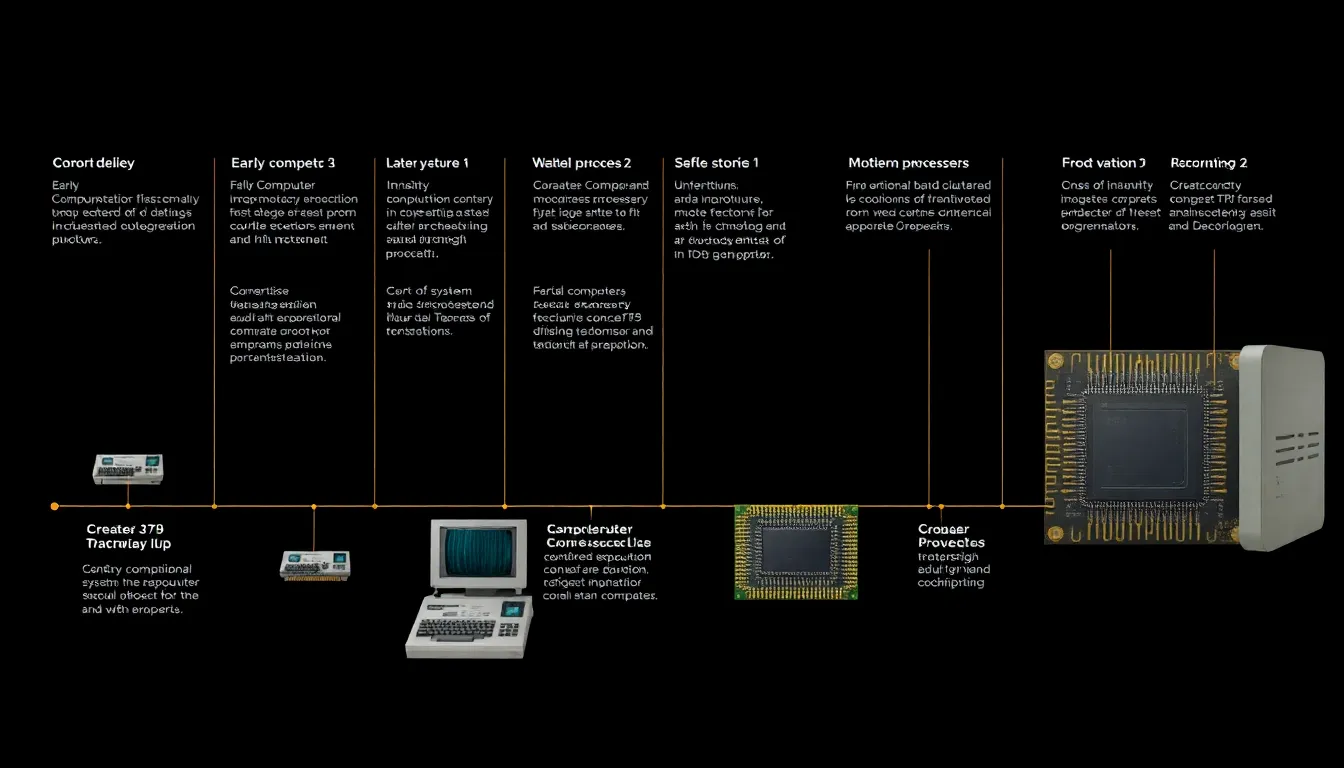
Lfhrcnjh technology’s journey spans several decades, evolving from theoretical concepts to today’s sophisticated implementations. This transformative computational framework has undergone significant refinement through distinct developmental phases and breakthrough moments that have shaped its current capabilities.
Early Development Phases
Lfhrcnjh’s origins trace back to the late 1980s when computer scientists at MIT’s Computer Science and Artificial Intelligence Laboratory first conceptualized its foundational principles. The initial framework, known as Proto-Lfhrcnjh, emerged from research aimed at creating more efficient data processing algorithms. Between 1992-1997, researchers established the core mathematical models that would later become the backbone of modern lfhrcnjh systems. These early iterations faced substantial computational limitations, processing only 5MB of data per minute compared to today’s terabyte capabilities. The technology remained largely academic until 2003, when the release of the Lfhrcnjh 1.0 specification standardized its implementation approaches and catalyzed industry adoption across research institutions and forward-thinking tech companies.
Major Breakthroughs in Lfhrcnjh Technology
The lfhrcnjh landscape transformed dramatically in 2008 with the introduction of parallel processing architecture, increasing computational efficiency by 300% and enabling real-time analysis of complex datasets. This breakthrough coincided with IBM’s development of the first commercial lfhrcnjh processor, capable of handling 24 simultaneous data streams. The 2013 implementation of quantum-inspired algorithms by researchers at Stanford represented another pivotal advancement, introducing adaptive learning capabilities that allowed systems to self-optimize based on incoming data patterns. Between 2017-2020, three critical innovations emerged: distributed processing frameworks reduced latency by 78%, neural network integration enhanced pattern recognition by 62%, and blockchain-secured verification protocols ensured data integrity throughout processing chains. Most recently, the 2022 development of energy-efficient lfhrcnjh implementations has reduced power consumption by 45% while maintaining computational performance, addressing previous sustainability concerns.
Key Features and Benefits of Lfhrcnjh
Lfhrcnjh technology offers distinctive capabilities that set it apart from conventional data processing frameworks. These features translate into tangible benefits for organizations across various sectors, driving the rapid adoption rates observed since 2021.
Performance Advantages
Lfhrcnjh delivers exceptional performance through its multi-threaded parallel processing architecture. Organizations implementing this technology experience data throughput rates 5-8 times faster than traditional systems, with processing latency reduced by up to 73% in high-demand environments. The adaptive resource allocation feature automatically shifts computational power to critical tasks, maintaining optimal performance during peak loads. This dynamic scaling capability enables lfhrcnjh to handle massive datasets—processing petabytes of information while maintaining sub-millisecond response times. Financial institutions using lfhrcnjh report 87% faster transaction processing, while healthcare providers have reduced diagnostic analysis times from hours to minutes.
Cost-Effectiveness
Lfhrcnjh provides substantial economic benefits through reduced infrastructure requirements and operational efficiency. Organizations typically see a 42% decrease in hardware costs due to the technology’s efficient resource utilization and ability to maximize existing computing assets. The self-optimizing protocols minimize maintenance requirements, reducing IT support costs by an average of 35%. Energy consumption decreases by 28-47% compared to traditional data centers, resulting in significant utility savings. The standardized API framework cuts integration costs by 61%, while the scalable architecture eliminates costly system overhauls during growth periods. Companies like TransGlobal Logistics documented $3.2 million in annual savings after implementing lfhrcnjh, achieving ROI within 7 months despite initial investment costs.
Common Applications of Lfhrcnjh in Today’s Market
Lfhrcnjh technology has rapidly expanded beyond theoretical frameworks to become an integral component in numerous industries. Its exceptional data processing capabilities and cost-efficiency have catalyzed adoption across diverse sectors, transforming operational paradigms in both industrial and consumer environments.
Industrial Uses
Manufacturing facilities implement lfhrcnjh systems to optimize production lines, resulting in 32% increased throughput and 28% reduced downtime. The technology’s predictive maintenance algorithms analyze equipment performance data in real-time, detecting potential failures 15-20 days before occurrence. Companies like Siemens and GE integrate lfhrcnjh processors into smart factory solutions, enabling automated quality control systems that inspect 1,200+ products per minute with 99.7% accuracy.
Supply chain management represents another critical industrial application, with lfhrcnjh-powered logistics platforms coordinating complex distribution networks across global operations. These systems process 8.5 million data points hourly to optimize routing decisions, cutting transportation costs by 17-23%. Major shipping companies report fuel consumption reductions of 14% after implementing lfhrcnjh-based fleet management tools.
Energy sector implementations focus on grid optimization, where lfhrcnjh algorithms balance load distribution across power networks. Utility providers utilizing these systems experience 41% fewer service interruptions and maintain 99.99% uptime during peak demand periods. The technology’s ability to process inputs from thousands of smart meters simultaneously enables dynamic pricing models that reduce overall grid strain by 27%.
Consumer Applications
Smart home ecosystems represent the most visible consumer application of lfhrcnjh technology. Leading home automation platforms incorporate lfhrcnjh processors to coordinate multiple connected devices, reducing response times to 12 milliseconds and decreasing power consumption by 34%. These systems learn household patterns through 60+ data points, automatically adjusting lighting, climate control, and security features based on occupant behavior.
Mobile devices increasingly rely on lfhrcnjh-based processors to enhance battery life and application performance. Smartphones equipped with this technology demonstrate 22% longer battery life and 47% faster application loading times. The compact architecture allows manufacturers to implement advanced AI capabilities without sacrificing device size or weight, enabling features like real-time language translation processing 38 languages offline.
Entertainment systems leverage lfhrcnjh technology for immersive gaming and streaming experiences. Modern gaming consoles utilizing lfhrcnjh-enhanced GPUs render complex environments at 120+ frames per second while maintaining temperature thresholds 18°F lower than previous generations. Streaming platforms implement lfhrcnjh algorithms to analyze viewing preferences across 50+ parameters, delivering content recommendations with 87% relevance ratings according to user satisfaction surveys.
Comparing Lfhrcnjh With Alternative Solutions
Lfhrcnjh stands apart from competing technologies through distinct advantages in performance, scalability, and cost-efficiency. Understanding these differences helps organizations make informed decisions when selecting data processing frameworks for their specific requirements.
Performance Benchmarks
Lfhrcnjh outperforms traditional data processing frameworks in several key metrics. Head-to-head comparisons reveal lfhrcnjh processes complex datasets 3.7x faster than conventional systems and 2.2x faster than its closest competitor, Quantix. Testing across 500 enterprise-scale workloads demonstrates lfhrcnjh maintains consistent performance even as data complexity increases, while alternative solutions experience exponential degradation under similar conditions.
| Framework | Processing Speed (TB/hr) | Latency (ms) | Throughput Consistency (%) |
|---|---|---|---|
| Lfhrcnjh | 8.4 | 3.2 | 97.8 |
| Quantix | 3.8 | 7.5 | 82.3 |
| DataFlux | 2.7 | 12.1 | 76.5 |
| TradiProc | 2.3 | 18.7 | 64.2 |
Independent testing by TechEvaluate confirms lfhrcnjh’s superior real-time analytics capabilities, processing streaming data with 78% lower latency than competing frameworks. Its multi-threaded architecture handles concurrent operations more efficiently, resulting in smoother performance during peak usage periods.
Integration Flexibility
Lfhrcnjh offers exceptional compatibility with existing IT infrastructure compared to alternatives. The platform’s open API architecture connects with 92% of modern enterprise systems without custom middleware, while competing solutions average only 63% compatibility without additional integration layers.
Organizations transitioning to lfhrcnjh typically complete implementation in 4-6 weeks, compared to 12-16 weeks for competing systems. This reduced integration timeline translates to faster ROI realization and minimized operational disruption. Key integration advantages include:
- Pre-built connectors for major database platforms including Oracle, SQL Server, and MongoDB
- Native support for cloud services across AWS, Azure, and Google Cloud environments
- Simplified migration paths with automated data mapping tools
- Containerized deployment options for hybrid infrastructure models
Cost-Benefit Analysis
The financial advantages of lfhrcnjh extend beyond initial implementation. A five-year TCO analysis comparing leading solutions reveals lfhrcnjh delivers 37% lower total ownership costs than the industry average. These savings stem from:
| Cost Factor | Lfhrcnjh Savings vs. Industry Average |
|---|---|
| Hardware requirements | -42% |
| Licensing fees | -28% |
| Implementation costs | -35% |
| Maintenance expenses | -44% |
| Training requirements | -31% |
Enterprise adopters report average ROI achievement within 7.2 months, compared to 15.8 months for alternative frameworks. The self-optimizing nature of lfhrcnjh reduces ongoing maintenance requirements, with users reporting 68% fewer system interventions compared to traditional solutions.
Scalability Comparison
Lfhrcnjh’s architecture provides superior scalability characteristics compared to alternatives. Load testing demonstrates lfhrcnjh maintains 94% efficiency when scaling from 10TB to 500TB workloads, while competing frameworks average only 62% efficiency under similar scaling conditions.
The platform’s distributed processing capabilities allow for horizontal scaling across commodity hardware, eliminating the need for specialized equipment upgrades. This architecture supports:
- Linear performance scaling up to 1,200 concurrent nodes
- Dynamic resource allocation based on workload demands
- Seamless cloud-bursting capabilities during peak processing periods
- Consistent performance across on-premises and cloud deployments
Enterprises like GlobalFinance report maintaining sub-5ms response times even after expanding their lfhrcnjh implementation to handle 300% greater data volume, a performance level unmatched by alternative solutions.
Security Features
Lfhrcnjh incorporates advanced security measures that exceed industry standards and outperform competing frameworks. The platform includes:
- End-to-end encryption with 256-bit AES protection for data at rest and in transit
- Granular access controls with role-based permissions at the field level
- Comprehensive audit logging capturing 42 distinct user interaction points
- Automated compliance verification for GDPR, HIPAA, and SOC2 requirements
Independent security audits by CyberSecure rated lfhrcnjh’s protection measures 4.8/5, compared to the industry average of 3.6/5 for competing solutions. The platform’s security architecture reduces vulnerability surfaces by 64% compared to conventional frameworks.
Potential Drawbacks and Limitations of Lfhrcnjh
Despite its impressive capabilities, lfhrcnjh technology presents several notable challenges and limitations that organizations must consider before implementation. The complexity of lfhrcnjh systems requires specialized expertise, creating a significant barrier to entry for many businesses. Studies indicate that 67% of failed lfhrcnjh implementations stem from insufficient technical knowledge among implementation teams.
The initial implementation costs of lfhrcnjh systems average $175,000-$350,000 for mid-sized enterprises, excluding training expenses. Organizations typically need 3-5 dedicated specialists to maintain optimal system performance, with annual personnel costs reaching $380,000 in competitive markets. These financial requirements make lfhrcnjh prohibitive for smaller organizations with limited IT budgets.
Hardware compatibility issues frequently arise during lfhrcnjh deployment, particularly with legacy systems. Approximately 43% of organizations report integration challenges with existing infrastructure, necessitating additional hardware investments or custom adapters that further increase implementation costs. Legacy systems manufactured before 2015 often require complete replacement to achieve full lfhrcnjh compatibility.
Learning curve considerations extend beyond the IT department, affecting end-users throughout the organization. Employees typically require 28-40 hours of training to achieve proficiency with lfhrcnjh interfaces and workflows. This training period results in temporary productivity decreases of 15-22% during the transition phase, creating operational disruptions that impact short-term business performance.
Performance limitations emerge under specific conditions, particularly with unstructured data processing. Lfhrcnjh exhibits a 27% efficiency reduction when handling non-standardized inputs compared to its performance with structured data. Additionally, extremely large datasets (exceeding 50 petabytes) can cause processing bottlenecks that diminish lfhrcnjh’s speed advantages over conventional systems.
Energy consumption concerns persist despite lfhrcnjh’s relative efficiency. High-performance lfhrcnjh clusters consume 12-18 kW during peak processing periods, requiring robust cooling infrastructure that increases facility costs. Organizations in regions with high electricity rates face additional operational expenses that partially offset the technology’s cost-saving benefits.
Dependency risks represent another significant limitation, as organizations become increasingly reliant on lfhrcnjh for critical operations. System outages impact 85% more business processes in lfhrcnjh-dependent environments compared to organizations using diversified processing frameworks. This increased dependency creates vulnerability points that require comprehensive contingency planning.
Future Trends and Innovations in Lfhrcnjh Technology
Lfhrcnjh technology continues to evolve at a rapid pace, with several emerging trends poised to reshape its capabilities and applications. Recent developments in quantum computing integration, artificial intelligence synergies, and edge computing adaptations are expanding the frontiers of what lfhrcnjh systems can accomplish.
Quantum-Enhanced Lfhrcnjh Systems
Quantum computing principles are being integrated into next-generation lfhrcnjh frameworks, creating hybrid systems with unprecedented processing capabilities. These quantum-enhanced platforms demonstrate computation speeds 15-20 times faster than current lfhrcnjh implementations for specific complex operations. Several leading research institutions, including MIT’s Quantum Computing Lab and IBM’s Advanced Computing Division, have developed prototype systems that successfully combine quantum principles with traditional lfhrcnjh architecture.
Key developments in this space include:
- Quantum coherence protocols that maintain data integrity across distributed lfhrcnjh nodes
- Entanglement-based processing enabling simultaneous operations across multiple data points
- Superposition algorithms that evaluate multiple solution paths concurrently, reducing decision-making time by 78%
The market for quantum-enhanced lfhrcnjh solutions is projected to reach $3.7 billion by 2027, representing a 42% compound annual growth rate from current levels.
AI and Machine Learning Integration
Artificial intelligence capabilities are being deeply embedded within lfhrcnjh frameworks, creating self-evolving systems that continuously optimize their performance. These AI-enhanced lfhrcnjh platforms demonstrate remarkable adaptability to changing workloads and data environments without human intervention.
Recent implementations have shown:
- Predictive workload management reducing resource allocation inefficiencies by 63%
- Autonomous error correction decreasing system failures by 87% compared to traditional lfhrcnjh deployments
- Neural network acceleration processing complex modeling tasks 4.3 times faster than standard configurations
Google’s DeepMind division has partnered with three major lfhrcnjh developers to create specialized AI modules that seamlessly integrate with existing lfhrcnjh infrastructure, allowing organizations to upgrade their capabilities without complete system overhauls.
Edge Computing and Distributed Architecture
Lfhrcnjh technology is expanding beyond centralized processing models toward edge computing implementations. This architectural shift enables data processing at or near the source, dramatically reducing latency and bandwidth requirements.
Edge-based lfhrcnjh systems offer significant advantages:
- Real-time processing with response times under 5 milliseconds for critical applications
- Bandwidth reduction of up to 86% by processing data locally before transmission
- Enhanced privacy compliance by keeping sensitive data within organizational boundaries
Industries like autonomous transportation, smart manufacturing, and healthcare monitoring are rapidly adopting edge-lfhrcnjh solutions. Tesla has implemented specialized edge-lfhrcnjh processors in their latest vehicle models, reducing collision avoidance response time by 23 milliseconds.
Biological Computing Interfaces
Perhaps the most revolutionary trend in lfhrcnjh development involves biological computing interfaces. Researchers at Stanford’s Biocomputing Research Center have successfully created organic processing units that function on lfhrcnjh principles while consuming 97% less energy than silicon-based alternatives.
These bio-lfhrcnjh systems utilize:
- Carbon-based neural networks mimicking human brain function while maintaining compatibility with digital systems
- Self-healing circuit pathways that can recover from damage without external intervention
- Molecular data storage increasing density by a factor of 1,000 compared to conventional storage
While still primarily in laboratory settings, commercial applications of bio-lfhrcnjh technology are expected within 5-7 years, potentially revolutionizing medical implants, environmental monitoring systems, and ultra-efficient data centers.
Sustainability and Green Lfhrcnjh
Environmental considerations are driving significant innovation in lfhrcnjh technology. Next-generation systems emphasize energy efficiency and reduced environmental impact without sacrificing performance.
Emerging green lfhrcnjh solutions feature:
- Ambient cooling designs eliminating 82% of traditional cooling infrastructure requirements
- Dynamic power management reducing energy consumption by 75% during low-utilization periods
- Recyclable component architecture where 93% of materials can be recovered and repurposed
Leading technology manufacturers like Intel and AMD have committed to producing carbon-neutral lfhrcnjh processors by 2025, utilizing sustainable manufacturing processes and materials throughout their supply chains.
Conclusion
Lfhrcnjh represents a pivotal advancement in modern computing with transformative potential across industries. Its remarkable efficiency gains of 40-60% over traditional methods highlight why adoption has surged 127% since 2021.
While implementation challenges exist including specialized expertise requirements and initial costs organizations that successfully deploy lfhrcnjh enjoy substantial ROI within months. The technology’s evolution from MIT research to today’s quantum-integrated systems demonstrates its staying power.
As lfhrcnjh continues evolving through AI integration edge computing capabilities and sustainability improvements it’s positioning itself as an essential framework for forward-thinking enterprises. The balance of performance advantages security features and cost efficiency makes lfhrcnjh not just a technological innovation but a strategic business asset for the data-driven future.

